
Category: Devotional Thoughts
-

Day 330: What to Make of Mars Hill? (Acts 17:18-34)
Paul’s sermon on Mars Hill is often celebrated as a master class in cultural engagement. Yet the results in Athens were modest, and Paul’s own later reflections suggest he learned something there about the limits of brilliance and the surpassing power of Christ crucified. Acts 17 reminds us that contextualization matters—but only Jesus saves.
-

Day 322: Six Jolly Cowboys (Acts 8:2)
A meditation on Johnny Cash, funerals, and the stark contrast between Ananias, Sapphira, and Stephen—asking what kind of life we’re living toward our own funeral, and what kind of people will carry us when our time comes.
-

Day 313: In Praise of Saint Incognita (Mark 14:9)
Through the Bible: Matthew 26, Mark 14
-

Day 302: The Other Time Jesus Got Mad (John 11)
Most people remember Jesus cleansing the temple as the one time He got angry. But in John 11, Jesus’ anger burns again—this time, not against people, but against death itself. When He stood at Lazarus’s tomb, He “snorted with anger,” confronting the Great Interrupter that had marred His Father’s perfect design.
-

Day 298: Seventy Two Others (Luke 10)
When Jesus sent out seventy-two followers, He wasn’t just multiplying His ministry—He was signaling that the gospel was meant for the whole world. Jesus still rejoices when ordinary people join Him in kingdom work.
-
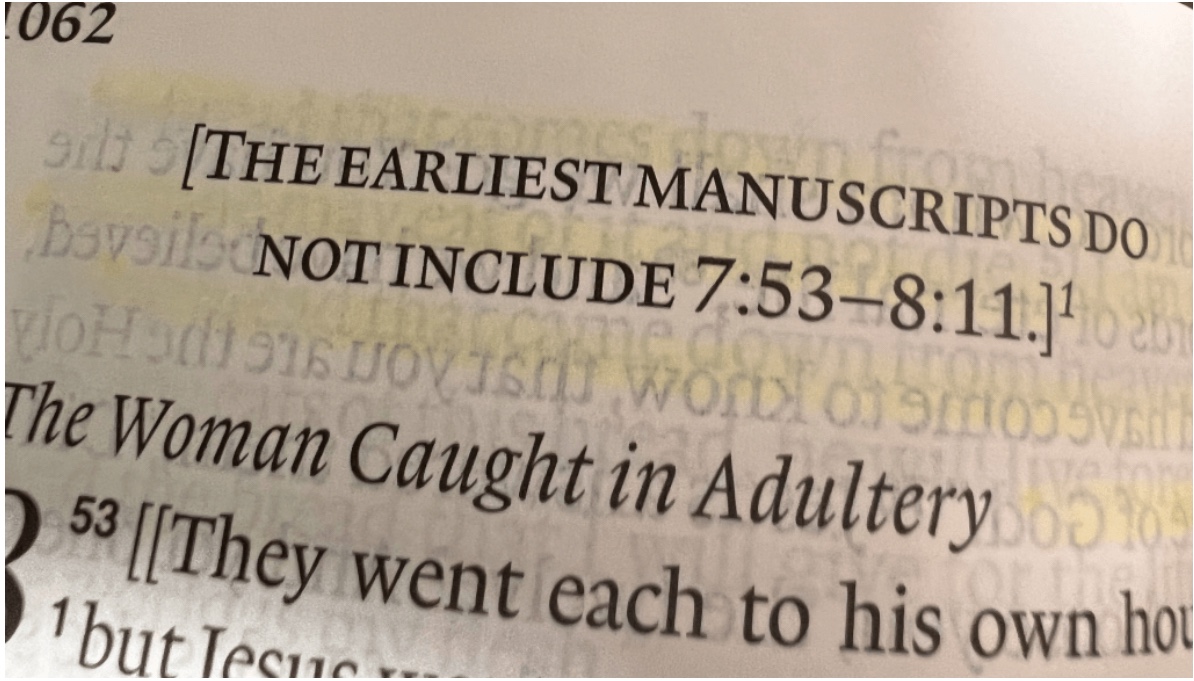
Day 296: The “Problem” of John 8:1-11
Many readers are startled to see a warning in their Bibles that the story of the woman caught in adultery isn’t in the earliest manuscripts. Does that mean it didn’t happen? In this post, James explores why this beloved passage moves around the manuscripts—and why its “interruption” may be exactly where it belongs.