
Category: Devotional Thoughts
-
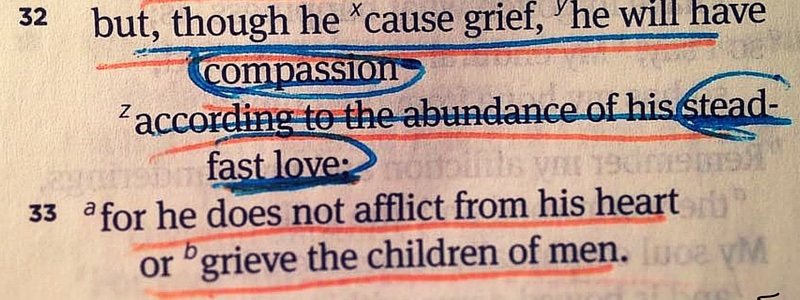
Day 238: In the Middle of My Complaining (Lamentations 3:31-33)
Can you find joy in the midst of sorrow? Jeremiah did. Literally. In the exact middle.
-

Day 229: Jefferson and Jehoiakim (Jeremiah 36:27-28)
Thomas Jefferson and King Jehoiakim had something surprising in common: both took a blade to God’s Word. But Scripture isn’t ours to edit, revise, or discard.
-

Day 212: From Devastation to Restoration (Comparing Isaiah 3 and 61)
Isaiah begins with judgment and ends with hope. By comparing Isaiah 3 with Isaiah 61, we discover that God specializes in turning devastation into restoration—and making beauty from ashes.
-

Day 202: Can a King Be Crowned Without God’s Consent? (Hosea 8:3-7)
Through the Bible: Hosea 8-14
-

Day 199: In the Eye of the Storm (Isaiah 26:3-4)
The storm may rage all around you, but God offers something the world never can: perfect peace. Isaiah 26 reminds us that real peace isn’t found by escaping the storm—it is found by trusting the One who rules over it.
-

Day 195: Does Micah tell Us EXACTLY Where Jesus Would Be Born? (Micah 4:8)
A little-known phrase in Micah 4:8 has led some scholars to suggest the prophet pointed to the very place where Jesus was born. The evidence is debated—but the picture of Christ as the spotless Lamb of God is indisputable.