
Category: Books of the Bible
-

Day 264: Fasts of Feasting (Zechariah 8:19)
Zechariah’s people had four painful anniversaries on their calendar—days marked by fasting, grief, and memories of Jerusalem’s fall. Then God promised to transform their fasts into feasts. What happens when God changes the meaning of a day?
-

Day 262: Why the Second Temple Was So… Meh (Haggai 2:3)
Why was the second temple so unimpressive compared to Solomon’s? Spurgeon saw something deeper at work: its lesser glory was preparing the way for a far greater glory—Christ Himself.
-

Haggai: First Things First (Part 7 of Short Books, Long Shadows)
What happens when God’s people get so busy building their own lives that they neglect what matters most? Haggai’s message is a call to consider our ways, put first things first, and trust the God who is with us while we rebuild. And buried in this little book is a promise that points all the…
-

Day 260: The Other Elam (Ezra 2:7, 31)
Ezra’s long list of returnees includes “the other Elam,” a name most readers skip over. This reflection and poem remind us that even the overlooked are remembered by God, and every name matters in His book.
-

Day 260: Planted in Babylon (Ezra 3:8)
Zerubbabel—“Planted in Babylon”—shows how God can grow beauty from exile. Even in hard seasons, He plants hope and brings forth Christ.
-
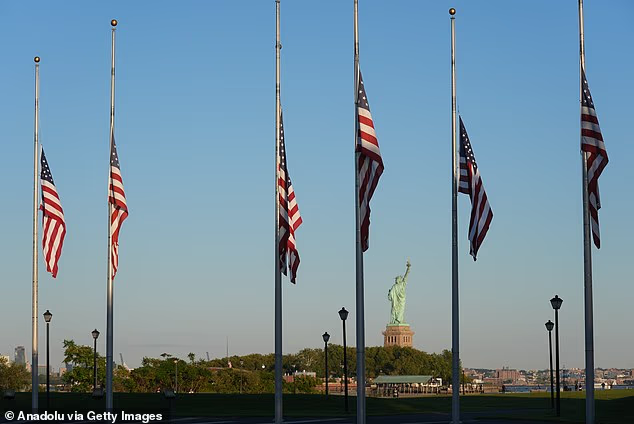
Day 258: On National Lament (Daniel 9:5-7)
Daniel’s prayer teaches us true lament: not blaming a broken world, but confessing the brokenness within—and hearing God’s response: “You are greatly loved.”